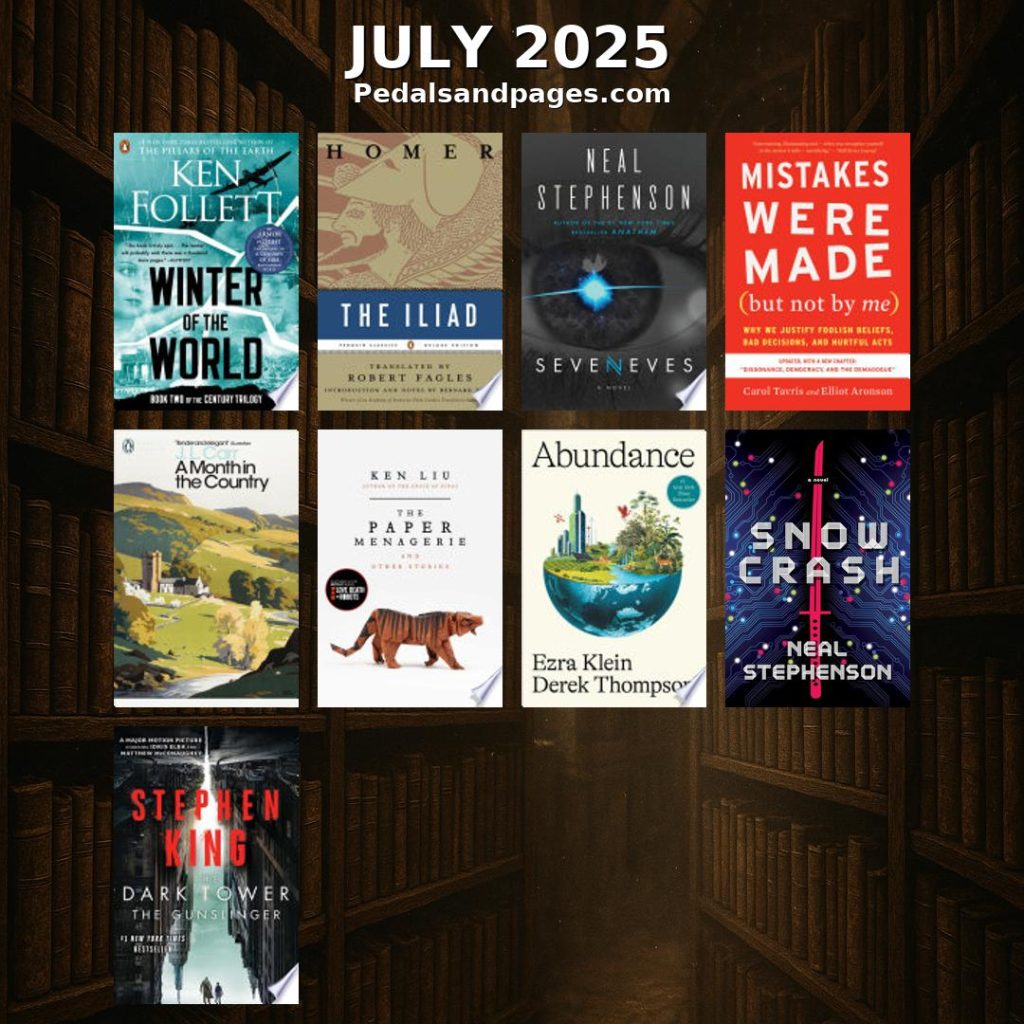
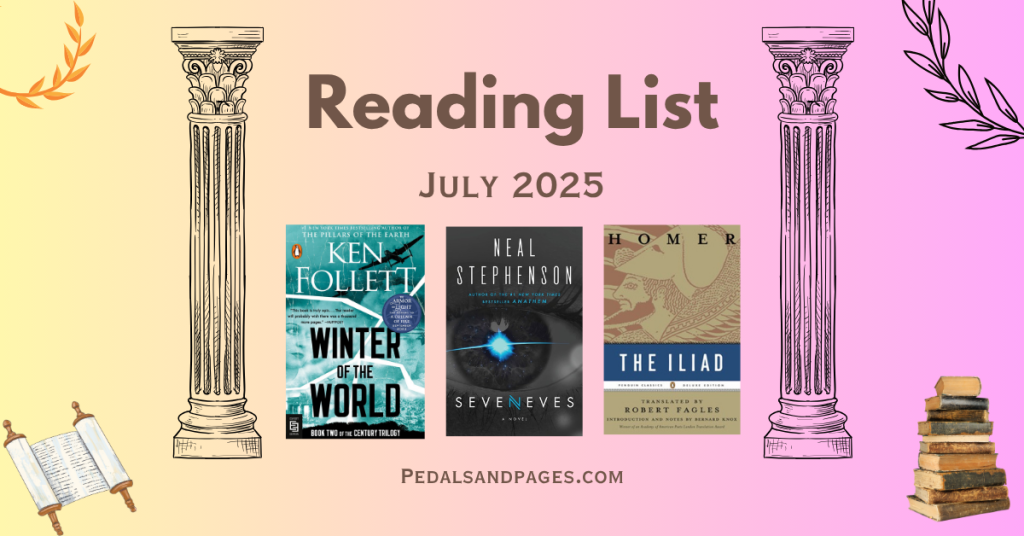

Welcome to another month! I carried a few of these titles over from June, as some of them were LONG reads! I had a lot more time to read in July compared to last month. Let’s get started!
Winter of the World by Ken Follett
Ken Follett returns with Winter of the World, the second installment in his sweeping Century Trilogy. Picking up where Fall of Giants left off (reviewed here), this novel follows the next generation of interconnected families as they navigate the turbulence of the 1930s and 1940s—spanning the rise of fascism, World War II, and the dawn of the nuclear age.
Building on the momentum of the first book, Winter of the World expands the emotional and historical scope, plunging readers into a turbulent era through the eyes of compelling characters in Germany, the U.S., the U.K., and the Soviet Union. This isn’t just a history lesson—it’s a vivid, character-driven epic where personal choices and global events collide.
Follett is one of my favorite authors, and his books never fail to miss a beat. He has this ability to allow the reader to have a relationship with the characters, only to rip them apart with tragedy and historical shortfalls.
I am currently reading Edge of Eternity—the final installment of the Century Trilogy. Admittedly, I am sad that this will be my last book in the series, but also eager to see how such an amazing franchise is wrapped up. Keep an eye out for that review next month.
Winter of the World gets a steady 4/5 stars for me! ⭐⭐⭐⭐
Seveneves by Neal Stephenson
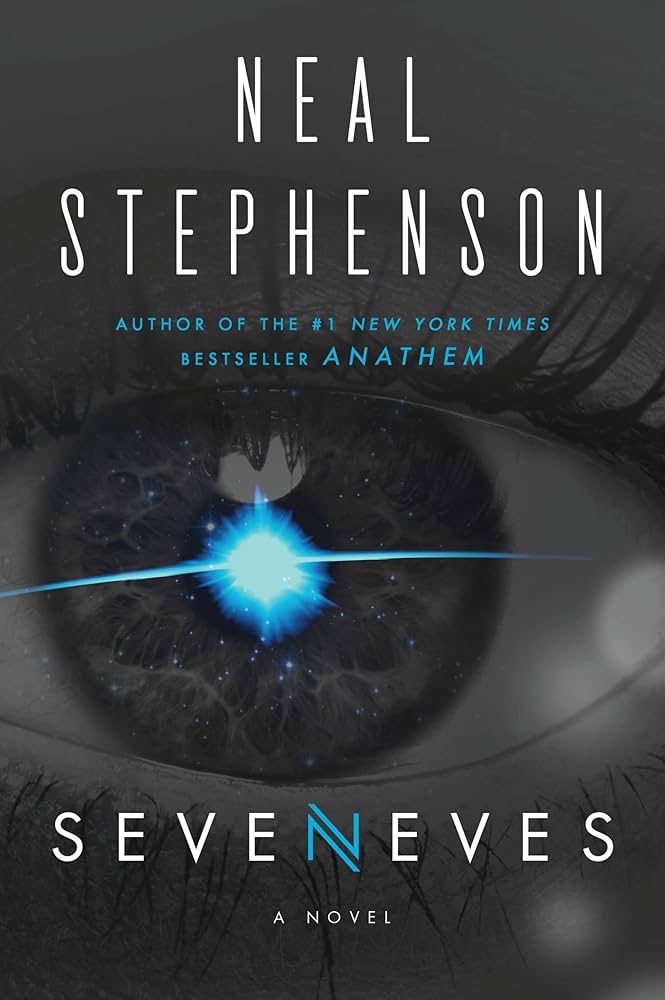
First up this month is a sci-fi pick! This title is fantastic for those who are fans of space, world-building, dystopian lots, apocalyptic, and downfall. Seveneves follows multiple characters throughout its 800-plus pages. One of my favorite aspects of the book is how the apocalyptic event (in this case, the moon exploding) happens within the first few pages of the book. There is no slow flame, and readers get underway with the immediate aftermath of the mysterious explosion of the moon.
Stephenson does a marvelous job with world-building. At times, the in-depth descriptions of the space can be rather advanced. I had to do a bit of research while reading the book to see how other readers were imagining some of the designs that the book goes into. This is all to say that if you are a fan of sci-fi world-building, this book is for you! I have been a fan of space for many years, and this book tickled my interstellar fancy. Stephenson clearly did research, and he even held a position at the space company Blue Origin. The physics and science within the book feel spot on and not over-the-top.
There are a few loose ends that I feel were not tied up as the book ended. This did not subtract from the overall book, but I do find myself wondering what happened to some of the characters. In the sake of not getting into spoilers, I will leave it at that. Stephenson explores the idiosyncrasies of the characters in a fantastic modality. Even the parts with action seem thought out, and we get real-time analyses of how the characters’ psyches are interacting with the situation they find themselves in.
I also found it interesting that some characters suddenly die without foreshadowing. This leaves the reader in a perpetual state of wonder and makes the book all the harder to put down.
About halfway through the book, I felt like things slowed down a bit too much for my liking. It felt like the plot was gaining a ton of steam, and then BAM, it hit a wall. Not a super big deal, but it is something I noticed, and I am curious if other readers found a similar anecdote.
I am not alone in thinking that the last 1/3 of the book could have been a separate installment. SO much changes, and the reader is immersed in this wonderful world-building experience. If you do end up reading this book, or have read it, let me know in the comments below if you also share these sentiments.
Seveneves gets 4/5 stars from me. I recommend this book, and while it is a bit of a longer read, I think every page does the book and its characters justice! ⭐⭐⭐⭐
A Month in the Country by J.L. Carr
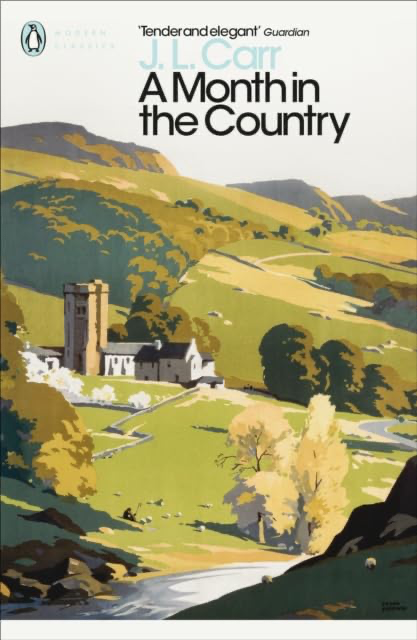
This novel is a short read and takes place after WW1. Carr explores the themes of PTSD and other forms of trauma while giving the sense that the main character is working through these afflictions—stemming from his time on the front lines. He sets off to England’s countryside to restore an old church painting. This book is not so much plot-driven inasmuch as it focuses more on the character’s overall development and how the time away from the busy world reshapes him.
I found this novel to be somewhat cozy and a different pace than what I have been reading as of late (which is exactly why I chose this title.) I think most readers will be able to connect with the main character, like I did.
Carr’s writing is beautiful and one of my favorite aspects of the novel. Overall, this title was not “life-changing,” but I think if we constantly chase books that are, we will miss out on so many great reads. This is a short read, and I think most will enjoy it–especially those who are or have dealt with PTSD or trauma in their lifetime. I give this title 3/5 stars for its simplicity. I did not take as much away from the book as I thought I would. ⭐⭐⭐
The Paper Menagerie and Other Stories by Ken Liu
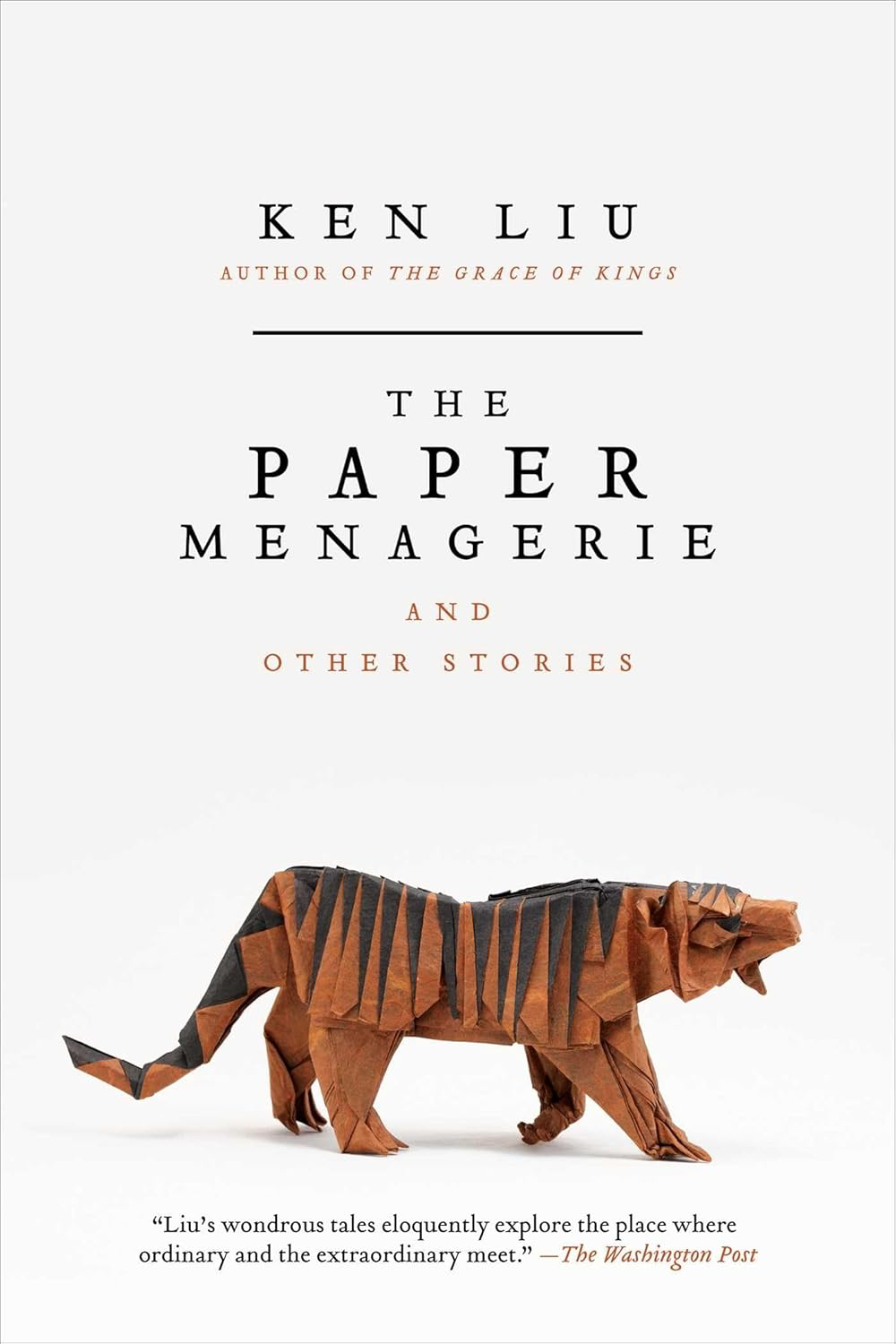
This title is interesting because it is the title of one of Liu’s short stories within the book itself. The subtitle of this book is “and other short stories.” This might confuse some readers, so keep in mind that this book is a collection of Liu’s works. The Paper Menagerie is, from what I can tell, supposed to be the star of the book. I found that some of the other short stories connected with me on a deeper level and left a greater impact. Some of the themes in Liu’s stories made me choke up a bit—a rarity in the books I have read.
Each short story in the collection is different from the last and is written beautifully. Liu has an immense following, and The Paper Menagerie is the first of his works that I have read.
One of the interesting things about Liu is that he had a knack for writing Sci-Fi novels. For me, this translates to some of his stories within this title, and—as a fan of world building and Sci-Fi—I was hooked to some of the worlds that he created. The massive subway/bullet train system that connects North America with Asia was awesome! When picking up this book, I was not expecting to read such awesome worldbuilding themes.
I think that this title is for anyone who enjoys short stories that really tug at the heart and mind strings. The words are well written, the character arcs are brilliant, and I can’t wait to read more from Liu.
I am curious if other readers are in the same boat, insofar as I enjoyed the other short stories compared to the “main” story that I think the author is trying to convey. In my mind, I had built up this epic story that I would soon be reading as I finished more short stories before it. Once I came to the short story (titled the same as the book), I was left with some disappointment. I was able to finish this book in about a week, reading before bed each night. 4/5 stars for me; worth the read!⭐⭐⭐⭐
The Iliad by Homer
Alright, so this one was a re-read from high school (or maybe we read The Odyssey, I can’t remember.) Nonetheless, reading the Iliad doesn’t require much explanation. It is, perhaps, one of the greatest and most influential books in the history of humanity.
I tackled this book by book, and it took me 24 days to get through (since there are 24 books, yay math!) I found this pretty manageable. I highly recommend going with this exact Penguin Classics translation by Robert Fagles. It had a handy glossary with all of the names in the back of it—I referenced this A LOT!
I am not going to rate the Iliad this month, as I humbly feel like it’s out of place for me to do so. I fall into the camp that everyone should read Homer in their lifetime.
Fun fact: Did you know that Alexander the Great carried a copy of The Iliad while on campaign? Pretty cool if you ask me. As I previously alluded to, I recommend tackling this Homeric masterpiece one book at a time per day. That kept the material and pacing fresh for me.
The Dark Tower I: The Gunslinger by Stephen King
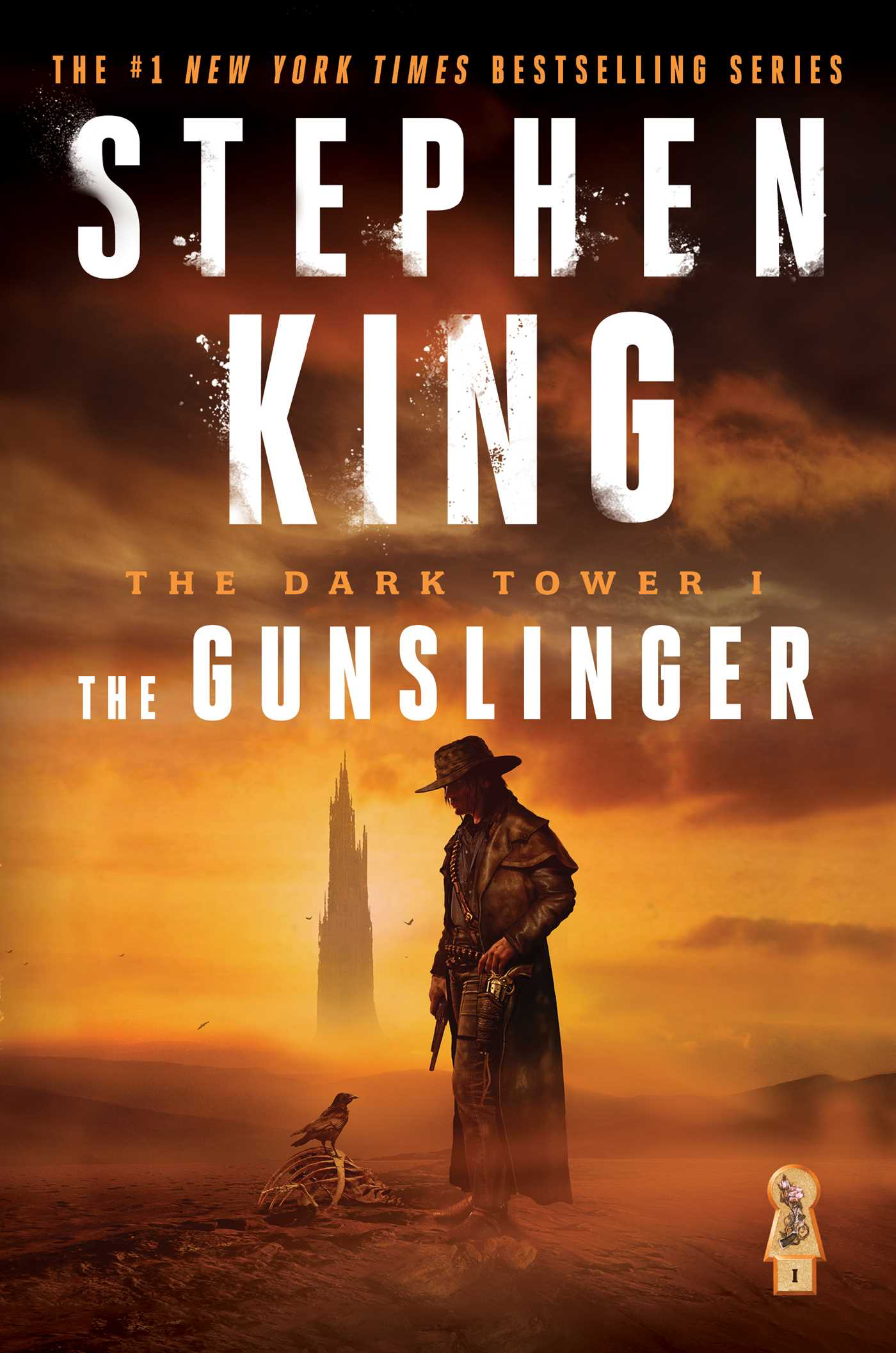
It is that time! Time to embrace one of Stephen King’s most influential works—the Dark Tower series! Someone over at Bluesky warned me that this first installment was boring, but I did not find that to be the case.
The first book is also super short, and it took me five days of casual reading to finish. Last year, I read The Stand by Stephen King—and, yes, I read the FULL version with all the extra words and scenes—and it was one of my favorite books of all time. I am excited to be back in the Stephen King universe with The Dark Tower Series.
This book seemed to go all over the place and is just a scene setter for the rest of the books (I am currently reading the second book in the series, and, spoiler alert, I love it!) The reader had no idea where Stephen King would go next with his stories, and that is one of the reasons he is an amazing author, in my opinion, and the opinion of millions of other SK fans.
As always, the writing style in this book is classic Stephen King. 5/5 stars for me! ⭐⭐⭐⭐⭐
Snow Crash by Neal Stephenson
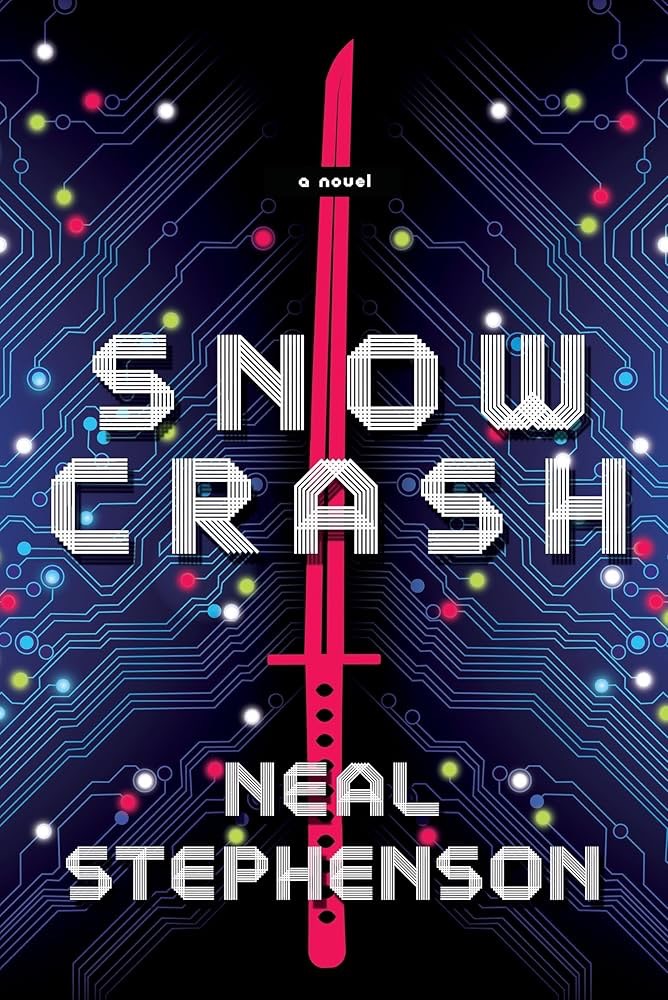
After reading Seveneves, I quickly realized that Neal Stephenson was a new favorite author of mine. His writing style, world-building (which I am really into), and plot devices are stellar. Like many, I’m not the biggest fan of his abrupt endings—but they do make you think for a while as you put the book down and realize there’s no more to it!
Snow Crash needs to be read with its publication period in mind. The book was written in the ’90s and is the pioneer of the Metaverse. They didn’t have all of the fancy tech we have now, so readers need to keep this in mind when they develop their impression of the book.
Last year, I read Ready Player One and Ready Player Two, which take very similar devices from Snow Crash. RPO is a fantastic book, but I hated the second one (sorry).
One thing I noticed when reading Snow Crash is how much I was laughing at the words on the page and the actions of each character. It is seriously a great book. My favorite term from the book is the “bimbo box.” Reading that line, again and again, had me in near tears. It was hilarious!
I’m not sure how to relay this to my readers, but Snow Crash, at times, seemed to lose its plot. I think this is done intentionally by Stephenson, and it didn’t subtract from the book, in my opinion. I was, however, confused by some of the plot points and found them to be mini-spinoffs from the story (like the storage unit and pizza franchise stuff). Again, this just made the story all the better for me, but I know some readers may prefer a purely plot-driven title.
This book is for anyone who enjoys other works by Stephenson. It has awesome 90s-tech vibes, and it’s like taking a cool time machine back to that era to see what people thought would happen with technology. He was pretty close, especially with the VR goggles.
I give Snow Crash a solid 4/5 stars. I enjoyed the read, and it wasn’t really that long of a book. Let me know if you end up checking it out—and your thoughts—in the comments below. Although they are very different books, I did enjoy Seveneves even more. ⭐⭐⭐⭐
That’s a wrap! This month was FULL of reading, and I was surprised by the number of books I was able to get through. Have a great month, and I’ll see everyone back here for the month of August!