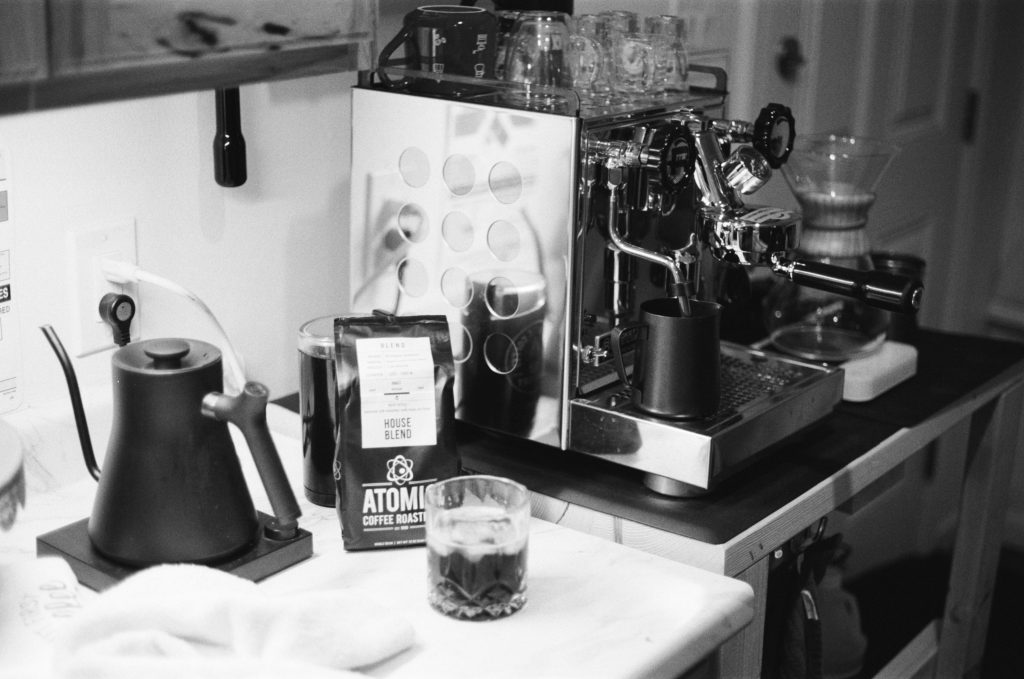
Hi everyone, I hope your summer is going well. I still have so many books left on my reading list that I want to finish by the end of the year, but instead of reading, I am going to write a quick blog post 😀
As always, you can explore my live, always up-to-date library right here: https://books.areslab.dev/public-library?filter=currently_reading
I wanted to take this post to highlight how my bookshelf has changed, as well as my current setup, and hopefully inspire others to get organized. On my history shelf, I finally took the leap of faith and organized my books by period, which seemed to reduce some of the clutter.
I am still having issues organizing my fiction and nonfiction books, so those are sort of living in a limbo of genre purgatory until I can figure some other things out. Without further ado, enjoy my bookshelves, and please feel free to share your setups as well.
(For an image’s full size, click on it.)
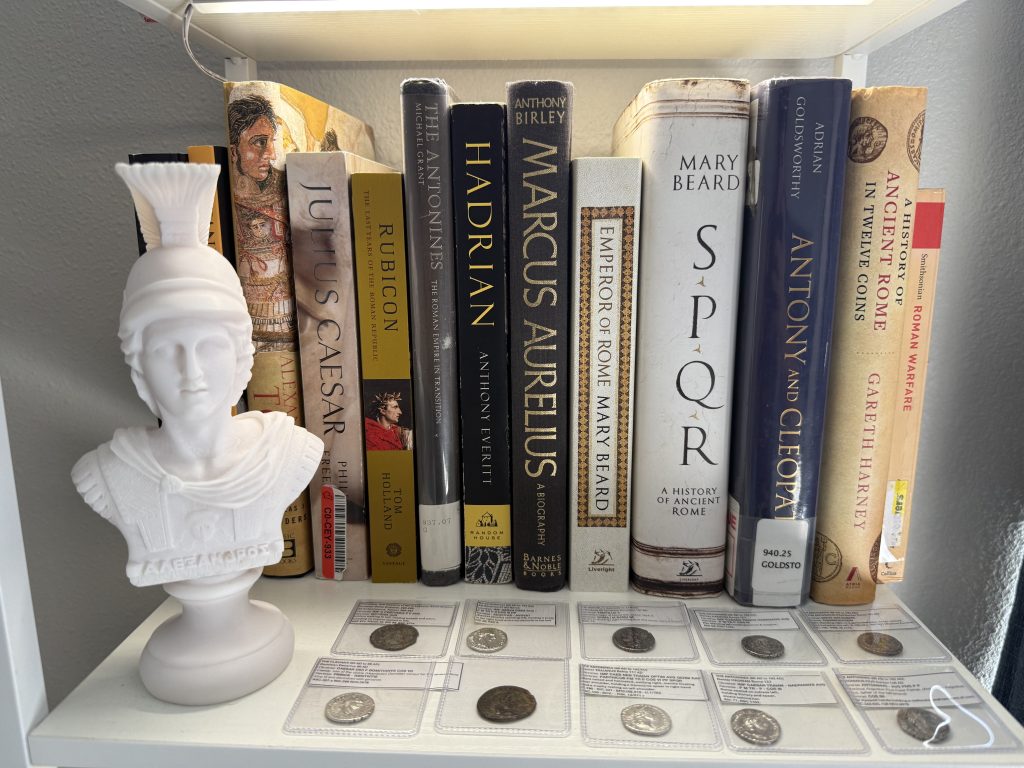
First up is one of my favorite history shelves and the start of my historical reading journey. My amazing wife gifted me this Alexander the Great marble bust for my birthday. I thought it went perfectly with my Alexander books as well as my early Roman Republic books. You’ll also notice the coins displayed, which used to be in their own case. I decided they would look better on the shelf next to all of their respective biographies.
The only book in this lineup that I haven’t read is the Marcus Aurelius biography. To be honest, I’ve read so much about him that I’m not sure I will ever get to this book, but nonetheless, it’s on the shelf if I ever decide to read it.
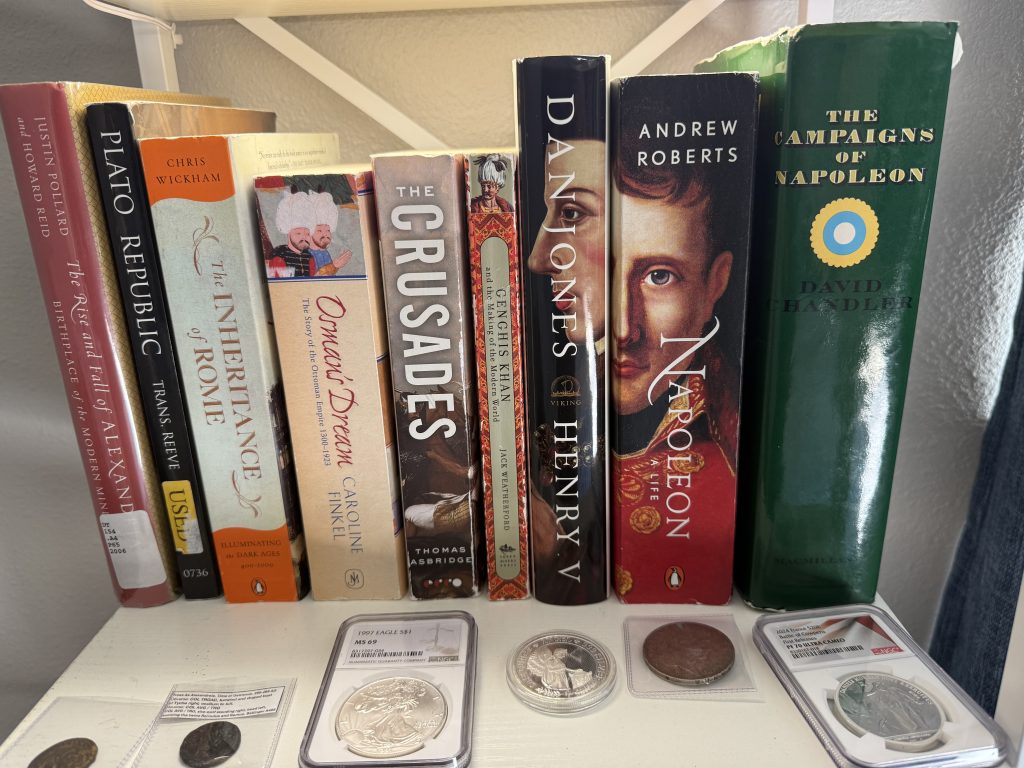
A historical bookshelf would not be complete without acknowledging Napoleon, the emperor. I have not read much about the Ottoman Empire, such as Osman’s Dream, and to be honest, I’m really into fiction right now, so I’m not sure how much more history I will read over the next couple of months.
The Crusades was a great book, which I have reviewed separately. Dan Jones’ Henry V book was excellent, and of course, Andrew Roberts’ Napoleon: A Life is perhaps the greatest book of all time about the emperor. I also have The Campaigns of Napoleon on the very right, which is a special book and holds a dear place in my heart.
I have not even scratched the surface of it, but whenever I want to look at a specific campaign, I know where to find it in the book. On the very left, we have The Rise and Fall of Alexandria. This was an amazing book, and I highly recommend it as it explores the history of the Great Library.
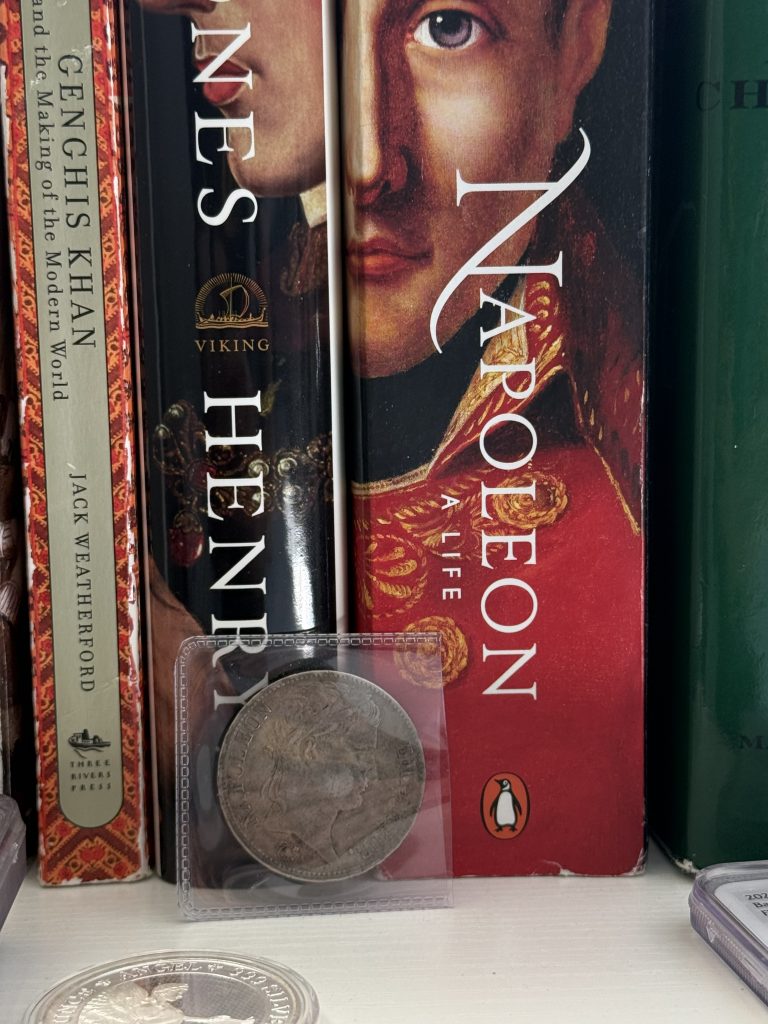
It taught me that we don’t really know what happened to the library. Instead of one great event, maybe it just eroded away over time, rather than being destroyed by a single fire, as many people think. As with my Roman shelf, you will notice an 1812 Napoleon franc underneath Andrew Roberts’ book. I love this coin, and even though it is not the oldest coin in my collection, I just think it looks great on the shelf right by the emperor himself.
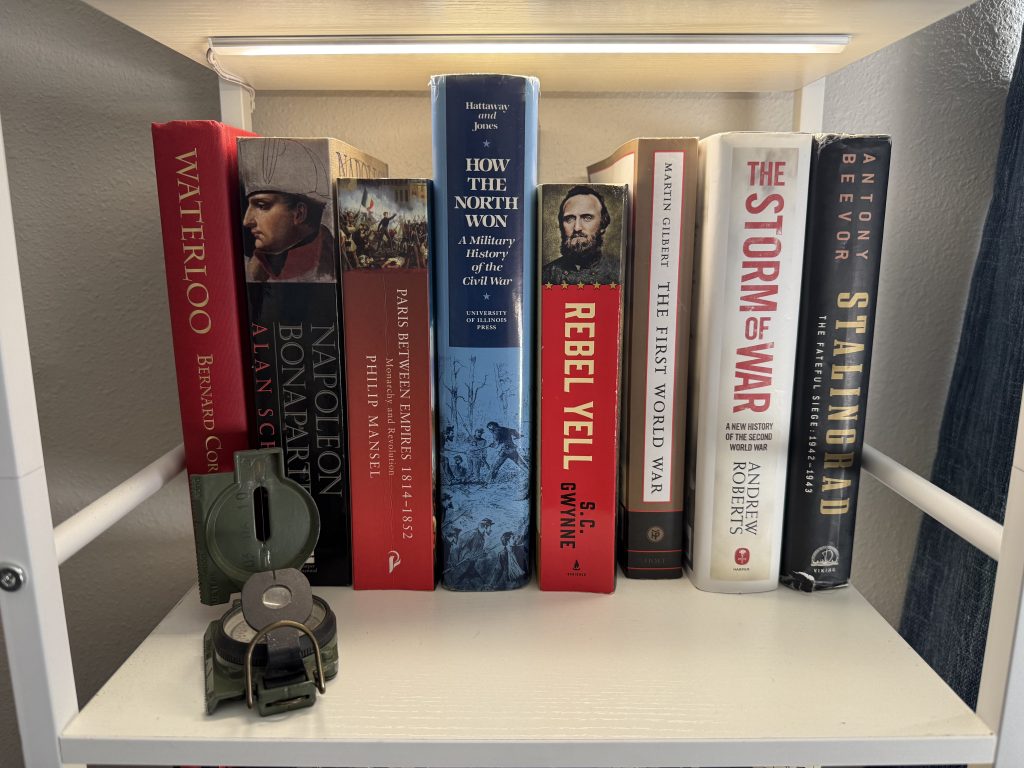
Waterloo by Bernard Cornwell is an amazing book, and I highly recommend it. I’ve reviewed it in the past. I haven’t read a whole lot from this shelf. Antony Beevor’s book about Stalingrad is perhaps one of my favorite World War II books.
Rebel Yell by S.C. Gwynne is my favorite Civil War book, but honestly, I’m not very into that period, so I don’t have much literature on it. The book How the North Won was a gift to me, and I have not read it yet.
The compass on the left is the one I used while I was in the army. It glows at night from the radioactive material inside of it, and I’m pretty sure I shouldn’t keep it next to the bed, but I do anyway. So if I develop some form of cancer in the next decade or so, we know where it came from.
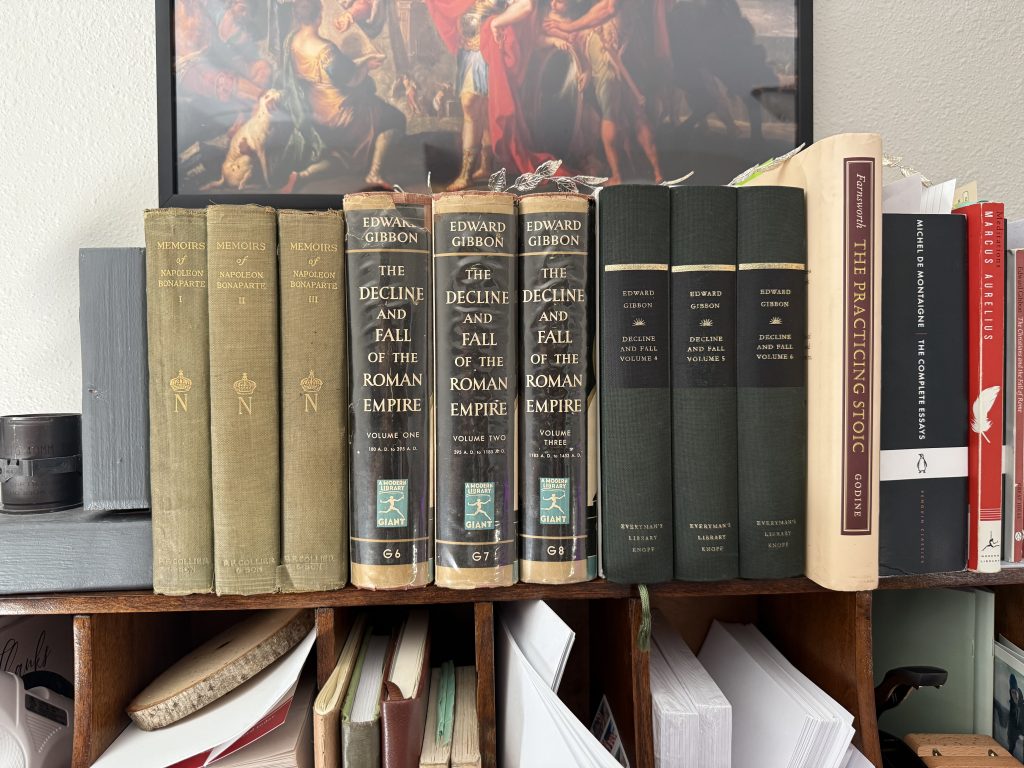
Moving over to my writing desk, I have a very special three-volume Memoirs of Napoleon Bonaparte. I haven’t read these, and honestly, they serve more as decoration. I want to try my best to preserve them.
You’ll also notice The Decline and Fall of the Roman Empire series by Edward Gibbon. I keep these mainly for decoration as they’re extremely outdated, but they remain one of the most famous accounts. Although they were written in the 1700s, many of Gibbon’s claims have been proven false or critically critiqued. I’m not going to get into that in this blog post.
I have The Practicing Stoic by Ward Farnsworth, who is my favorite modern philosopher, if you want to call him that. I also have The Complete Essays by Michel de Montaigne, and my original copy of Meditations by Marcus Aurelius, of course.
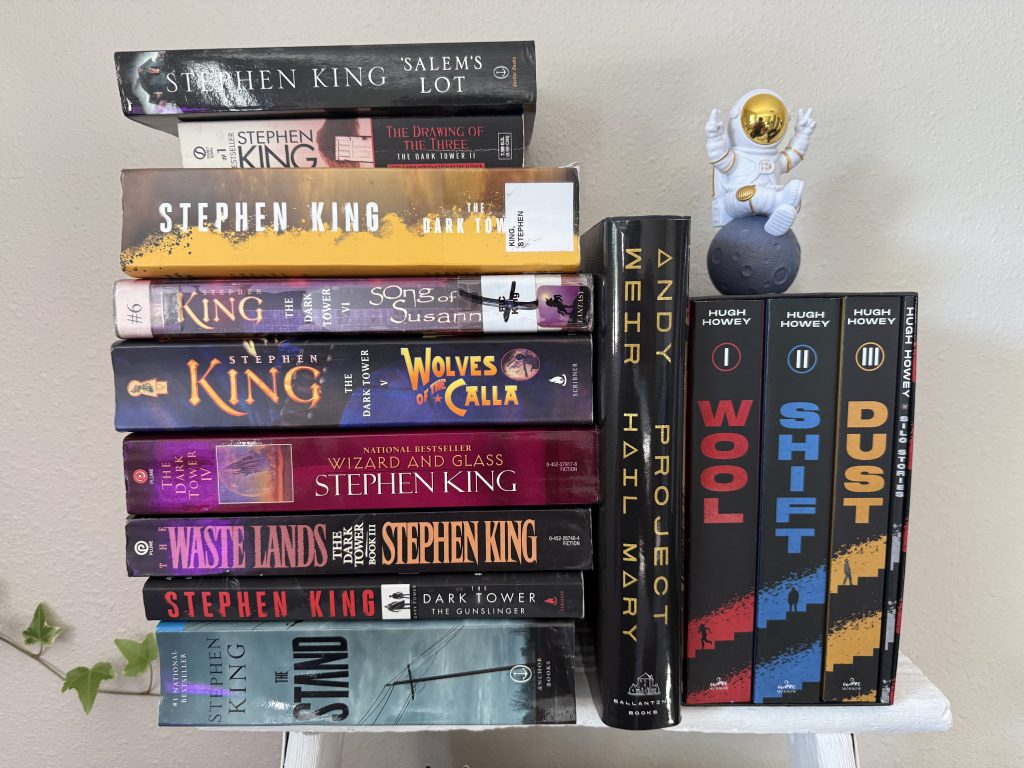
Alright, here’s where things start to get a little more fun if you aren’t super into history. Of course, I have The Stand by Stephen King, which I read last winter and absolutely loved. I read the extended version, but honestly, I would recommend sticking with the non-extended version, as I think it would have had the same impact.
On the right, I have Project Hail Mary by Andy Weir, one of the greatest science fiction books of all time. The movie is coming out soon, and so far the trailers have been disappointing. I hope it’s decent. I also have the three books in the Silo series, which are pretty self-explanatory and amazing.
Then I have Stephen King’s The Dark Tower series, which I am currently in the middle of as of August 2025. I’ve read Salem’s Lot, which was great. Not pictured here is The Shining, which I have also read by Stephen King and highly recommend.
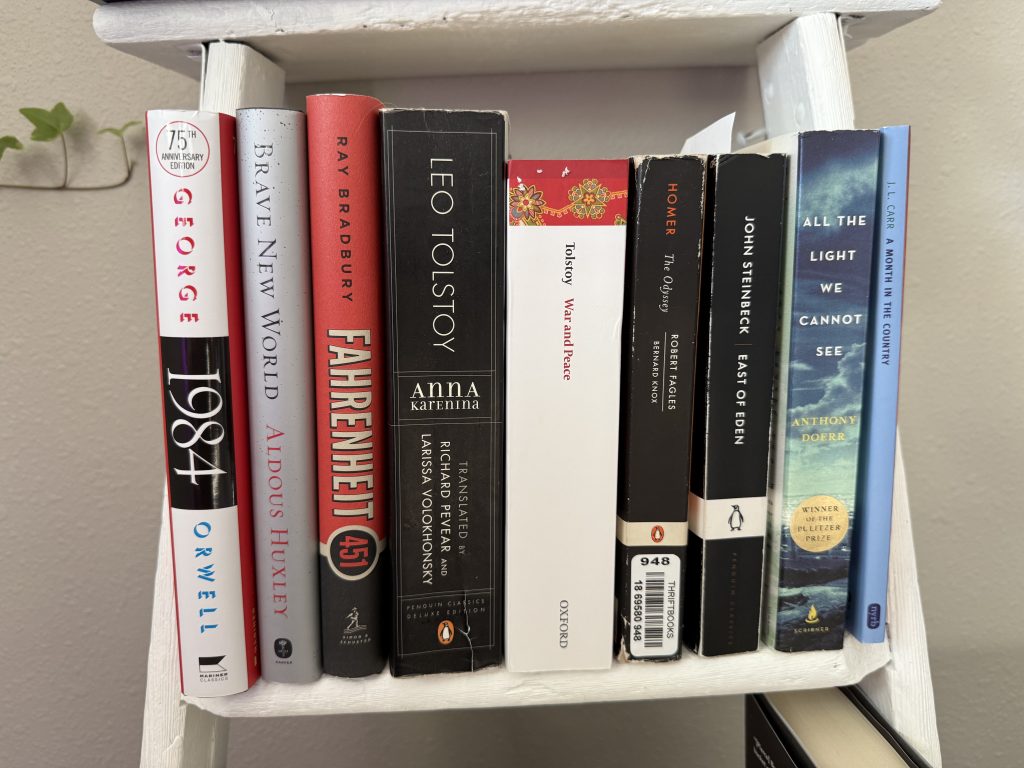
Here is where my library starts to get a little tricky in its organization. I have some classics as well as banned books, and you will also notice All the Light We Cannot See by Anthony Doerr.
I believe this book is one of the greatest written of my generation at least, and it will be a classic for decades, if not centuries, to come. The book is absolutely beautiful, and if you haven’t read it, I don’t know what the hell you are doing with your life 😉
I’ve read a little bit of Leo Tolstoy, but I’m not sure when I will get to the books pictured here. Also, an honorable mention: East of Eden by John Steinbeck is one of my favorite books of all time. Similar to All the Light We Cannot See, if you haven’t read it yet, what are you doing with your life?
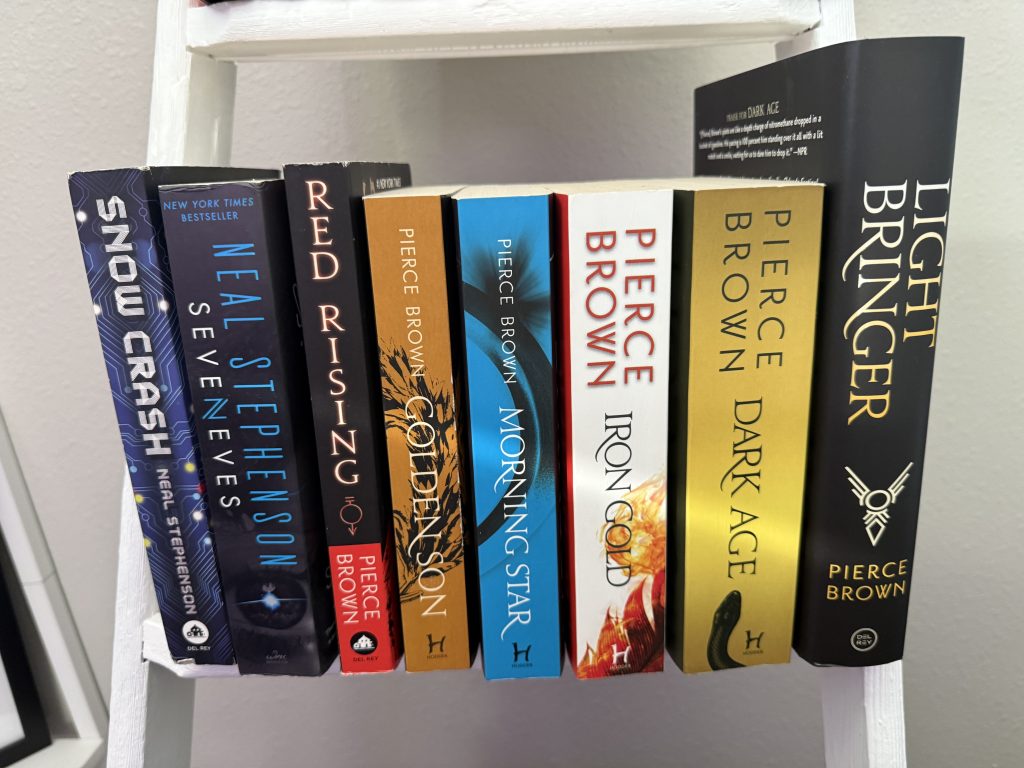
Alright sci-fi fans, strap in because here we go. I just finished Snow Crash by Neal Stephenson as well as Seveneves by Neal Stephenson. Both are amazing books, and I’ve recently reviewed them.
Seveneves is perhaps one of my favorite sci-fi books of all time, behind the Red Rising series, of course, by Pierce Brown; one of the greatest sci-fi writers of my generation, at least.
I am looking forward to the final Red Rising book coming out soon, whenever he gets around to writing it. No rush, Pierce 😉
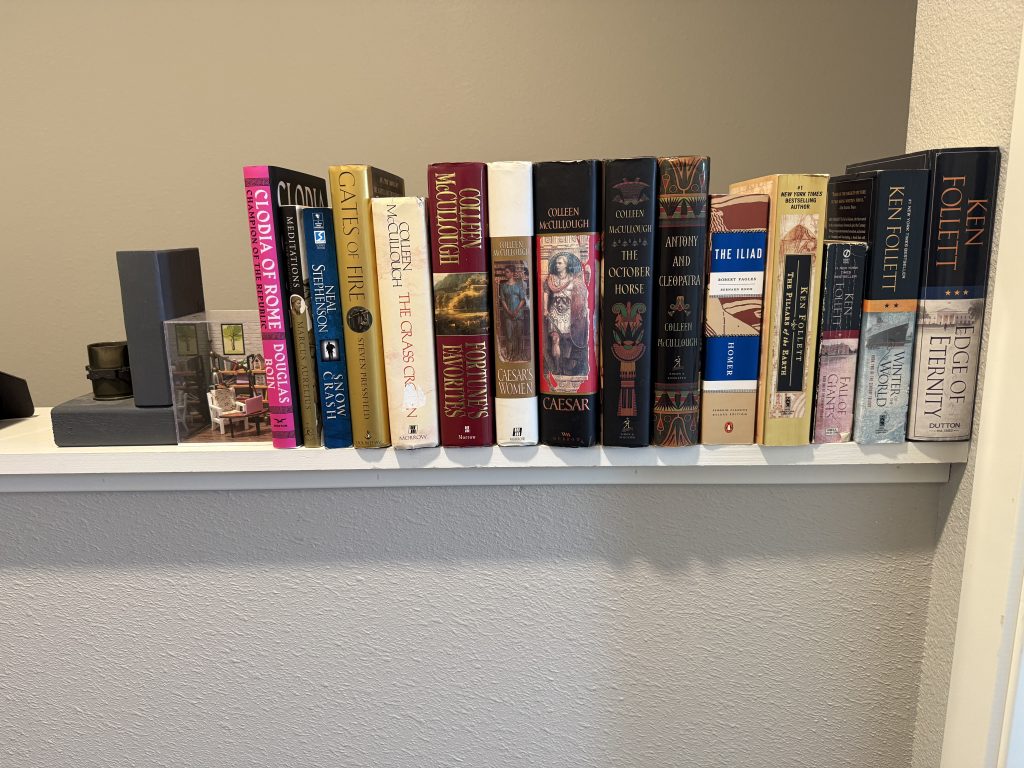
Last but not least is the annex section of my bookshelf, which has moved into another room. I am just starting the Masters of Rome series by Colleen McCullough. I am also finishing Ken Follett’s Century Trilogy with Edge of Eternity. I have about four hours left in the audiobook as of the time of writing this blog post.
I finished the Iliad last month, which was just as challenging as you can imagine. Honestly, I think breaking it up into one book per day was manageable, and I think people are a little dramatic when they say it’s bad. It is what it is. The thing was written thousands of years ago, literally.
Thanks for stopping by to check out my bookshelf. I plan to do another update at the end of this year or the beginning of next year, as more books arrive. Hopefully, I can organize it in a way that is less chaotic than it is now.
I mentioned earlier that I have shifted from nonfiction to mostly fiction. I think this is to escape the bleak reality we are currently living in, as geriatric men and women continue to ram this country, and much of the world, towards fascism. Anyway, I digress. I hope everyone enjoys their books, and be sure to check out my book reviews, also posted on this blog.
As always, you can view my live and up-to-date library online on this page: https://books.areslab.dev/public-library?filter=currently_reading