
Over the past two years, I have rediscovered my passion for networking and self-hosting. As we progress in our new digital age, I notice that more and more companies are squeezing as much data out of us as they can to make a quick buck, and, while I can’t blame them, it’s something I am not thrilled about. I will always have a digital footprint; it’s nearly impossible to escape with how much tech we have. Heck, my wristwatch is probably tracking some metric. But when it comes to my most-used apps, I have decided to fight back.
What is Self-Hosting?
Self-hosting means running your own software, like websites, apps, or services, on hardware you control, rather than relying on third-party platforms like Google, Facebook, or Dropbox. Instead of trusting Big Tech with your data, you host the tools yourself, often using a home server, VPS, or even a Raspberry Pi.
It can seem really complicated at first, and this post is NOT a tutorial on how to even begin this process. But, rest assured, YouTube and Reddit have amazing resources on how to get started.
What Makes These Apps Different?
Most self-hosted applications are open-source, meaning that you can see the entire code that the developers have created. You can even pull the code and modify it yourself, giving you the ability to customize your web app however you see fit. Because these are community projects, everything is out in the open.
With this in mind, it is important to understand that self-hosted apps have a bit more security vulnerabilities in them. So, make sure the developer is keeping up-to-date with the packages and software, whereas big tech companies pay people 24/7 to monitor their applications for vulnerabilities. Knocking on wood, I have never had an issue, and a lot of it comes down to making sure you are following good security practices. Please don’t let this scare you away from self-hosting, as it can be pretty simple to secure your network. Again, YouTube and Reddit will be your best friends!
One of the most IMPORTANT aspects of self-hosting is that you OWN your data. It is yours to do with as you please. Some big apps, such as Fable (for book tracking), don’t even let you export your data, meaning that they make it hard to switch to a different app altogether. Owning your data is key, as companies have many policies where they technically own your data and you are at the mercy of their policies and integrity. Also, what happens if something goes wrong and your data gets deleted? Or an app starts to charge for a service that was promise to be free for life?
What Can You Self-Host?
The sky is the limit here. My blog you are viewing right this very second is completely self-hosted. I don’t pay a third-party to manage it or store the files! Seriously, developers all around the world are making fantastic apps- from note-taking to recipe management. I host a ton of applications and scripts. Here are just a few that I use every day:
???? MyBibliotheca (Reading Tracker)
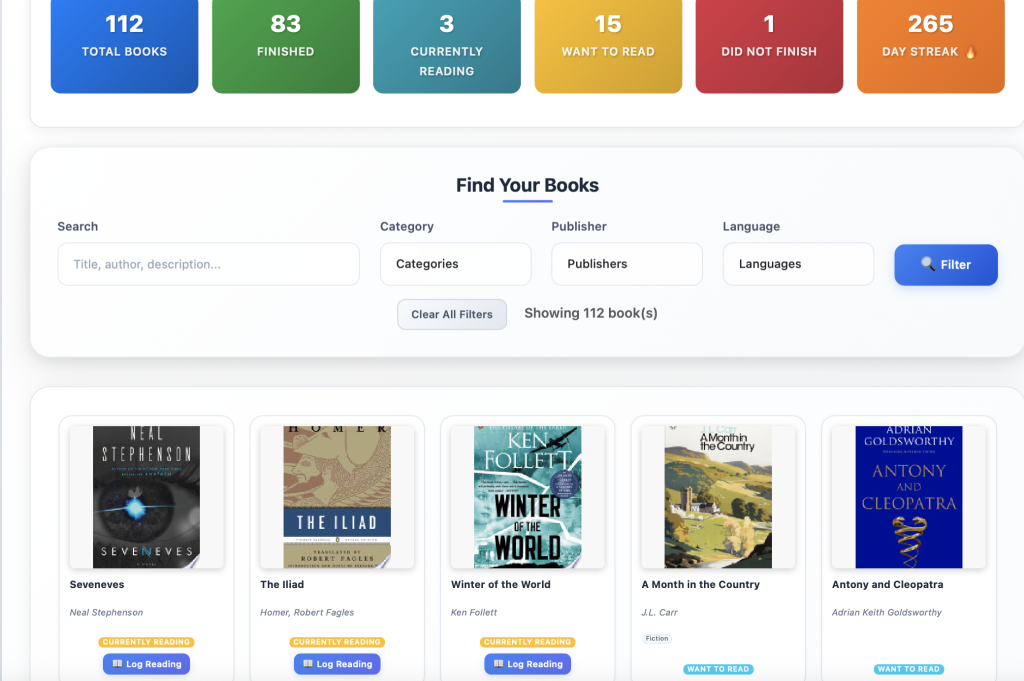
I developed this application myself, and it is available here. This was my first major released app, and so far, the feedback has been great. I am excited to see where the project goes! I used to track my reading on sites like Goodreads or Fable. Now, I use a self-hosted app that lets me log my books, track progress, and reflect on what I’m reading—without ads, algorithms, or a social feed I didn’t ask for. It’s just me and my library. I have total control of the data, and it never leaves my domain.
????️ Mealie (Recipe Manager)
Instead of relying on cluttered food blogs or recipe apps that require accounts and track my clicks, I host Mealie—a beautiful, local-first recipe manager. It helps me organize my favorite meals and plan, without feeding data to advertisers. There really isn’t much to say about Mealie; it is simply awesome. My wife can add her recipes, and we both are synced up and know exactly which meal is ready for the night. Keep in mind- all of this is ad-free and, once again, I have total control.
???? Home Assistant
My smart home now runs on Home Assistant, an open-source platform that gives me full control over my devices. No more relying on Google or Amazon just to turn on a light or check the thermostat. Plus, it integrates seamlessly with everything—from lights to sensors—without leaking data to the cloud. We used to use Wyze smart plugs, and they worked fine, until I realized that all of those commands and data to turn the plugs on and off were first going to a third-party cloud and then back into my home. This wasn’t a big deal, but relying on a third-party for something like this felt like a bet: would they start a subscription service and force users to pay?
???? Cloud-Free Security Cameras
Most consumer-grade security systems send footage to third-party servers. Not mine. I’ve set up a local camera system that records and stores video on my own devices. That means I know exactly where the footage is and who can access it: me. Last summer, before self-hosting my security feeds, I had reached out to tech support to help me troubleshoot a camera. Without warning, the customer service rep rebooted my camera remotely and stated that “they could see me live on the camera” and that it was working. I immediately unplugged the camera and sent it back. No thanks.
I Am Tired of Subscriptions
From software to streaming to smart devices, it feels like everything is a subscription now. You don’t buy a product—you lease access to it. Even things that used to be one-time purchases, like photo editing apps or note-taking tools, are now locked behind monthly fees. Remember when we used to own things? Companies like Amazon, when they “sell” you an eBook, are “licensing” the ability for you to view that file- you don’t even own it! This is why I always try to support open-source projects as well as startup companies. The endless cycle of subscription price raising has to stop at some point.
Have Fun!
Self-hosting can be a lot of fun, and I am still learning so much about it. There are times when things break, and a lot of lessons are learned. This is part of the journey, and I’d be lying if I told you I haven’t bricked a server at least once in my journey (ok, it’s happened quite a lot.) The freedom to have control of your data is amazing. Let me know in the comments below if you get started with your self-hosting journey and what apps you are interested in hosting.