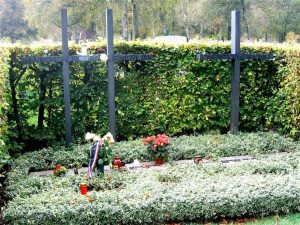
2/22/26 Editorial Correction: An earlier version of this text stated that Sophie Scholl was executed by the Gestapo. In fact, while the Gestapo arrested and interrogated Scholl, she was tried and sentenced to death by the Nazi People’s Court (Volksgerichtshof). The execution itself was carried out by state judicial authorities at Stadelheim Prison on February 22, 1943.
On a cold winter’s day in Munich, Sophie Scholl, her brother Hans, and their friend, Christoph Probst, were found guilty of treason and sentenced to death by guillotine. Brave until the very end, they each drew their final breaths around 5PM on the 22nd of February, 1943.
I first encountered Sophie’s story while researching fascism and populism for an article about white Christian nationalism I am working on. Her courage immediately grabbed me, and I fell into its orbit. I wanted to understand more about the circumstances that led these brave few to resist the Nazi jackboot, ultimately leading to their executions.
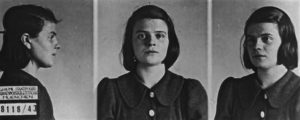
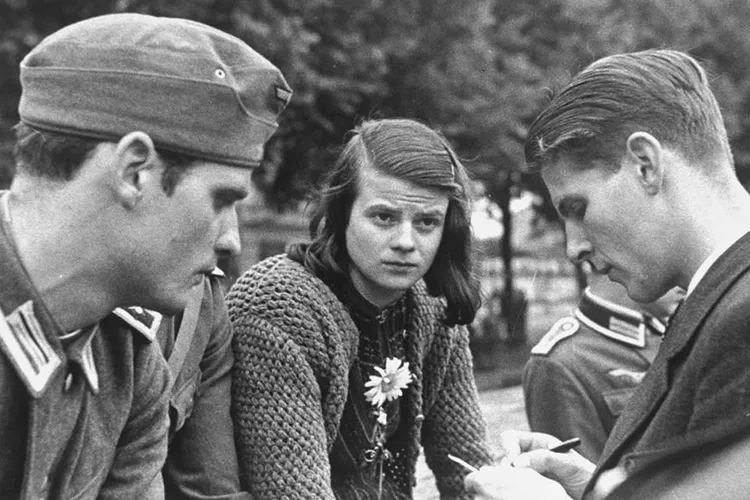
The White Rose, a resistance group at the University of Munich, was led by five students and one professor: Willi Graf, Kurt Huber, Christoph Probst, Alexander Schmorell, Hans Scholl, and the focus of this article, Sophie. The formation was not one that lasted months or even years. Indeed, the movement started in the summer of 1942, and not even a full year lapsed before the members were executed.
People like Sophie struggled to reconcile their beliefs with those of the Third Reich, even though many Germans were enthralled with the grandiloquence of the Nazi party. I think her story stands as a testament to the schism between nationalism and the morality of humankind. People like Sophie and Hans couldn’t exist in a world of hate while standing on the sidelines. Regimes fear this ineffable resistance and are seemingly quick to stomp it out.
“I can’t understand how some people continuously risk other people’s lives. I will never understand it and I think it’s terrible. Don’t tell me it’s for the Fatherland.” -Sophie to Fritz Hartnagel
I cannot exuberantly make clear what led me to be so fervently moved by her story, and I think that is ok; no explanation is required. I maintain that so many of us share the burdens that humankind has gone through, and perhaps many of us are curious as to why the challenges that Sophie faced are repeating themselves in many parts of the world. The mulish rhetoric and haughty scapegoating of right-wing populism are growing more extreme. Those who lived through the events of World War Two, the Third Reich, and the Holocaust are thinning. In most cases, we merely have history books and recorded accounts that furnish us insight into these regimes. In other words, we are forgetting how onerous populism and nationalism can be.
While we are certainly distant from the circumstances that Sophie and others in the 1930s and 40s found themselves in, it is futile to eschew the reality that, at any moment, society can degrade itself. In the United States, depredations are taking place that would’ve seemed beyond comprehension just a decade ago. But we should look further than there. There is a genocide taking place in the Middle East, and unchecked immigration is engulfing Europe, which has resulted in an increase in populism that I cannot honestly blame (as unfortunate as it is.) Populist movements gain support by attributing societal problems to a marginalized or defenseless group—a strategy Sophie Scholl and the White Rose vehemently opposed in Nazi Germany.
Although Sophie was born just 100 years ago, the impact she had on the world, I fear, might be transient. The edifying point of her story, at least for me, is that we have the opportunity to stand up and help those in need. I’ve written about altruism in a separate essay, and I encourage others to take a look at it. I urge you to contact your representatives, make charitable contributions, and use your voice to advocate for those who are unable to do so to prevent this dilemma and to spread altruism.